Saturday, 4 May 2019

Forgotten Games of The Girl Child

Some GIRL GAMES played in The South that have almost disappeared : 
These days , there is a revival of interest in the traditional games of our country and its heartening to note that many clubs have sprung up to teach board games like Aadu-Huli atta , chowkabara , Paramapadam , Mancala etc. to the present generation . 
For lack of safe playing spaces , today's children are not able to indulge in Gilli-Danda , Lagori , Kuntobille etc. and it is understandable that these games have faded away from our lives. 
While Board games are for all children irrespective of gender, there were games specifically enjoyed by the Girl Child , which are not being popularised as much currently. 
Those girl-games were gentler , entertaining , often involving ditties / folksongs and needed hardly any supplies or space to play. 
The games were not confined to specific regions . Variations of the basic themes were spread everywhere. So also , the songs that accompanied girl games were varied and numerous.

Word Association : ( Kannada) 
One very popular game involved word associations . 
It was in Q and A format , taking one word of every line and asking a question about it : "which/ what " . 
The answer would be another ( associated) word .
Mothers and older girls could make the sequences longer and harder for the little ones to come up with apt words. 
The song was accompanied by striking/Clappping of each others hands in a certain pattern , keeping beat with the syllables of the verse.
“Acchacchu . Belladacchu .
Allinodu . Illi nodu . 
Sampangi maradalli gumpu nodu .
Yaava gumpu ? Kaage gumpu .
Yaava kaage ? Kappu kaage .
Yaava kappy ? Ijjila kappu. 
Yaava ijjilu ? Soudey ijjilu .
Yaava soudey ? Kaada soudey .
Yaava kaadu ? Sudugaadu ! 


 Guessing Game ( Malayalam ) 
Any small rounded object ( seed , button , berry , bead, cowrie ) was enclosed within both palms ( box-like) and the closed hands were waved , rolled about, shaken.....
All the while the girl sang :
" Akkaiyil Ikkaiyilo pazhukka , ponnappan trikkaiyilo pazhukka ..."
( Pazhukka = ripe areca fruit ) 

"Is it in this hand or that hand or the Lord's ? 
Undetected , soundlessly it leaves for the First bridge/ step " 
At the end of the stanza , the girl separated her palms quickly , made fists and asked the other to guess in which hand the object was hidden. Quickness of hand was needed . Also ,a quick eye to detect the hand movement . 
The song went on to the second stage , third stage , after which , if not guessed right , a forfeit was due.

 Treasure Hunt .( Tamil ) 
Best played by river banks / sea shore . 
An elongated mound of sand was built . One girl held a slim object ( twig ,coin etc) between the thumb and index finger and ploughed it into the mound , running the sand-covered hand from one end of the mound to another, three or four times . She would drop the object anywhere , deep inside , anytime, but kept running the hand till end of song . When song ended , the other girl interlocked the fingers of both hands as a " net " and put it down where she guessed the object was. The mound was destroyed to find out if she was right . And built again for the next round. 
Interestingly , the song " Kichu kichu Tambalam, kiyakiya tambalam" has no meaning at all ! 
( perhaps a corrupted form of some Senthamizh ( OldTamil ) poem , no idea)

Rap and Snap ! ( Telugu ) 
Fairly universal . Known better as Knucklebones or Astragaloi .
A game that can be played alone or with any number of others . It involves doing two things together : singing and juggling pebbles . Five pebbles each . Lay all on floor , toss one up in the air and before it lands , pick up one/ two of those on ground and catch the falling pebble before it hits ground , toss up again , collect the rest .....and keep rapping ! Any rhyme is good enough . 
One much loved song was about the wedding of Mr.Monkey ! 

Kothi baavaku pellanta
Kondaa konaa vididhanta
Kukka nakkala vindhanta
Enugu vaddana cheyunanta
Elugu vintha choochunanta
Kodi, kokila, kaakamma

Kothi pelliki paata anta

Vaara Annam


This was a brief phenomenon , lasting , at the most , for just three or four generations in South India . Still , as a memory of a small vignette of long dead social mores , its worth a note .

Imparting education , before advent of European modes of schooling , was almost similar to adopting the pupils . The boys lived with the Guru in his home , not just learning from texts , but picking up life skills as well . Western system of education brought instituitions like High Schools and Colleges and these early temples of learning were situated in Cities only . Boys from small towns and rural areas , desirous of earning college degrees , had to migrate far from their homes and families and fend for themselves in strange big towns . 
Choultries and hostels provided shelter , but food was a major problem . Hotels were few and expensive for poor students . It was in this atmosphere that a philanthropic notion found root . 
"Anna-dana" has always been regarded as a great Virtue and people were ready to help these displaced Students out of a sense of Dharma . 
Each community , through the tribal grapevine , reached out to migrating students of their own kind and took up the responsibility of feeding them . 

For the wealthy , who lived in Manors populated with extended families and retainers , a couple of extra mouths to feed hardly mattered and they "adopted" two or three students , wholesale , to be fed everyday. But the ordinary folk did not lag behind in contributing their mite. A system was worked out whereby one student would be fed , by turns , by different families on different days of the week , so that no one family felt the strain on resources. This system came to be called " Vaara-Anna " ( ವಾರ ಅನ್ನ ) in Kannada; "Vaara -Sappadu "( வார சாப்பாடு ) in Tamil . It worked like " If its Tuesday , it must be Thimmappa's" . 

One funny offshoot of this arrangement was the appellations the boys earned. Often their names were prefixed with the name of the weekday they came to dine ( eg : Budavara Somu ) . Sometimes , even the name was omitted and a boy could end up being known as just "Sukravaram " ! 

Many students from impoverished backgrounds owed the bright future their college education brought them to the kindness of unrelated people who fed them on the Vaara-anna routine . Strong , long lasting bonds were forged between the donor and donee , becoming the standard fixture of nostalgia for many achievers who came up the hard way . 
The Vara Anna tradition continued right upto mid 20th century , dying out totally in the early sixties 
when educational institutions , with affiliated hostes , started sprouting in smaller towns too and Hotels and Cafes proliferated everywhere . 

(representational pic)
The last batch of Vara Anna beneficiaries would now be very senior citizens and may remember with fondness the strange times when they ate as guests of seven families !

SACRED GROVES

( A Sthala Vriksha )
Treating Trees and Woods as Sacred has been an integral part of the social and religious consciousness of old civilizations all over the world. The Institution of Sacred Groves goes back to the pre-agrarian period, before humans started tilling land. It was based on the belief that all Creations of Nature are worthy of respect and preservation.

SACRED GROVES in INDIA : are those patches of woodland dedicated to a deity / Guardian /Ancestral Spirit and protected by local community. The older the groves are, the more rudimentary the shrines to these guardians , sometimes represented by just a rock, the focus being on the holiness of the forest itself.
Marking a stand of trees as “Sacred” ensures preservation of the grove as lung space, encouraging bio diversity , maintaining soil fertility , regulating local hydrology and offering refuge to a variety of animal species too. Logging and Poaching , minimised. Reverence for groves/forests influences local community towards sustainable utilisation of Natural Resources, as boons granded by The Spirit of The Forest.
Sometimes, in absence of an entire forest, a representation of it, in the form of a “Panchavati” ( five species of trees ) is maintained beside the community shrine.
As with everything else, the Sacred Grove Tradition too is facing danger of rampant Urbanisation : encroachment , logging , slash and burn. Ironically, in a few instances, the deity of the sacred grove gets a brand new spacious temple built by enthusiastic devotees who cut down and clear away most of the forest for the enterprise. When focus shifts from the sacredness of the grove to Popularity of the Deity, the very concept of conservation of forests gets defeated.
The Western Ghats and The North East Belt are known to have more number of Sacred Groves than other regions.
Mawphlang Sacred Forest in Meghalayas is considered special because it preserves the ancient ecosystem , undisturbed by any intervention, in its virgin state, till today.

Sacred Groves find mention in our Epics , Myths , Legends and Folk Lore. NAIMISHARANYAM , where many great Seers lived, is the most sacred of all groves, because of the belief that Sri Narayana himself is in Vana –Swaroopam ( forest form) here. 
In The Ramayana, the exiled Rama with brother and wife, visits many groves and woods made sacred by presence of Rishis . Such sanctified woods are referred to as TAPOVANAs and no desecration of these were ever tolerated . 
Forest Spirits are popularly called YAKSHI or Yakshini . They can be playful or mischievous , benevolent or malevolent , just like Mother Nature herself. 
Vana Durga and BanaShankari are forest dwelling Mothers more popular in the south.

In Nepal, even to this day, blessings of the Goddess of the Forest , BAN DEVI , are sought before entering for work of any kind. Though not specially designated as Sacred Forest, any forest automatically merits such respect .


DEVARA KADUs of Kodagu District, Karnataka.
Kodagu ( Coorg), spread across undulating hilly terrain with salubrious weather, is a particularly lush land where, by tradition, every village community maintained a Sacred Grove. Before cash crop plantations became widespread here, Kodagu was known for its abundant Sacred Groves dedicated to Aiyyappa or Subramanya, both considered Forest Guardians. They were mostly represented by only a Menhir and all local festivities and Jatres took place in the Groves. Forest produce like Honey,firewood, medicinal herbs and fruits were allowed to be gathered , but only after ritualistic prayers for permission from the Guardian . Though the number of Devara Kadus has greatly dwindled, certain beliefs about Guardian Spirits still linger on. They are now believed to guard the plantations.

                                          ( Guarding the Grove)
KOVIL KADUs and NANDAVANAMs of Tamil Nadu. Folk Deities, Guardians of The Village ( Muniswaran, Ayyanar , Karuppan etc) are usually placed in specially protected Groves which cannot be exploited by the community. The Ayyanar Groves are spectacular sights, with gigantic images and numerous clay horses , big and small, offered as votives . 
When Grand Temples were commissioned by royalty and wealthy patrons in big towns, provision was made to plant and nurture gardens of flowers, fruits and herbs, dedicated to the temples . These were the holy NANDAVANAMS. Besides that, any one particular tree, (with significance arising from legends related to the shrine’s origin ), would be planted within the temple compound and honoured as The Sthala Vriksham. The tree received veneration equal to that of the deities.

(Worship of Trees and Putthu - termite hills where snakes dwell)
KAVUs of Kerala. It was once customary for all homesteads ( thatavads) to nurture a patch of woods dedicated to the family deity, mostly Bhagavathi ( the mother goddess) or Naga Devatha ( Spirit of the forest ) or Shasthappan ( the Hunter God ). Theyyam, the mystical and oracular trance dance was always performed in such sacred groves. Many Sarpa Kavus continue to be maintained well inspite of huge shrines coming up . But many small private holdings have vanished. The Kerala Forest Department ( Social Forestry Wing) has developed modules to conserve neglected sacred groves by encouraging citizen participation.

DEVRAIs or DEVRAHATIs of Maharashtra /Konkan , are considered the abode of Gods. It is thanks to tribal communities that these groves have come down to us from ancient times, mostly unharmed . But, pressures of urbanisation are bent upon ringing in death for them. A few volunatary groups have been trying to spread awareness about their importance and the need for conservation.

GOMPA FORESTS : Gompas are Buddhist campuses for Learning , meditation and worship. It is common for Gompas to be in secluded places which provide the serene environment necessary for their functioning. Having protected woods arond Gompas has been a longstanding tradition. The Sacred Gompa Forests are held in great reverence as “natural teachers”. 

SNIPPETS : 

The 800 year old NALLUR TOPU ,near Bengaluru,  is a sacred grove with aged tamarind trees of many varieties. With two temples . Today it is maintained as a Biodiversity HotSpot. (above pic)

Tree Worship is practised in Jharkhand . Sacred Groves here are called : SARNA

As many as 40 Sacred Groves ( Madaico) have been identified across Assam . Tribal groups like Bodos, Dimsa and the Rabha have a tradition of worshipping forests .


A ritual of Tree Weddings is observed in certain pockets of South India. A Peepal and a Neem, when found growing close together, are taken as a blessing and are wedded in a grand ceremony. They are then protected and allowed to grow intertwined. When fully grown, their shade becomes the village plaza where all community gatherings take place . They attain divine status.

Birch Bark Biting !


One of the oldest art forms of the Algonquian peoples ( Original Natives  of North America ), Birch Bark Biting is a method of making intricate designs on paper-thin birch bark ..... only by biting !!! 
It was an art tradition practised exclusively by women , who used the designs created  as  blueprints/ design-sheets  for bead work and  (porcupine) quill embroidery  on larger utility goods . 
As the birchbark sheet is folded in four or six , before biting  , the unfolded design is always symmetrical . And unique - no two pieces can be exactly alike. Like snowflakes. 
Only the eyeteeth ( canines) were used for the incising . By applying pressure of varying intensities while biting , the markings made were either superficial or cut through  to produce lace-like loveliness .

One  small piece from 1900 , of Ojibwa tribe , is exhibited  in Portland Art Museum , where I saw  this amazing , ancient Craft . 


The tough , flexible , waterproof bark of the Birch  tree was of great importance to the  Original Natives , who used it widely in making  containers and bags , canoes , pictographic scrolls , shoe - uppers , teepee (tent) coverings etc. 

Birch Bark Biting  , as an household art, died out like many other traditions of the Natives,  as they got " assimilated " with the culture of the white immigrants . Due to the fragile nature of the pieces , very few from " pre-contact" days survive . 


Apparently, the vanished art has been revived in recent times by a few descendents trying to reconnect with  their tribal identity .

LAI ROT NAM - Black and Gold magic

LAI ROT NAM 

When on a Wat visit , you  just cant miss those door and window panes , many a time protected by an overlay of plexiglass . You can tell right away that they are precious . Not just expensive for material value alone . Precious because of the intricacy of the craft , sometimes because of the age and always because they are a labour of love and piety , offered to the Lord as a reconfirmation of Faith . 

The traditional Thai decorative Art of Gold leaf inlay on Black Lacquered  wood  originated  during the Ayutthya Period ( 14 th to 18th Century ) reaching the highpoint of creativity in 17th Century . When the capital shifted to Bangkok ( Rattinakosin Era, 18th Cent ) , the art was modified with Chinese influences , while Chiang Mai , in the north , preserved the traditional  Thai technique . To this day , the Chiang Mai label is assurance of the highest quality of work. 

The process : 
  1. A wooden or bamboo base is coated  with multiple layers of Raq or Black  Lacquer ( also called True Lacquer ), which is the sap of The Burmese Laq tree ( Melanorrhoea usitata ) and left to dry. Sometimes, when the bamboo base is delicate , cotton fabric is stuck over it for reinforcement.
  2. The required design is traced on to the prepared base . 
  3. A gummy water soluble yellow paste is then applied to all areas that are required to remain black . 
  4. Finally, one layer of lacquer is applied all over, covering everything . When it is  semi dried, goldleaf is patted down over the entire surface. 
  5. This is left to dry for  whole day and then washed in cold water . All the gum,  along with the gold on it , will be washed away leaving only the design gilded in gold intact . The rest of the area is black . The name Lai Rot Nam refers to this last stage when , after washing in water , the beautiful designs emerge . 

This decorative art was much used in the  making of cabinets and chests  for storing precious manuscripts . The Raq helped to keep off insects . The manuscript chests or shelves were placed in pavilions that stood on stilts in water , to prevent creept crawlies from getting to them . It seemed quite a natural progrsssion to apply lacquer , and gilding , to the walls and doors  of such pavilions too . 
Later , the decorative art was applied to all things of utility . Door and window panes and frames, bowls , boxes , furniture, walls , anything wooden could be beautified with the rich , glossy black and gold ornamentation . The goldleaf  used is 99.9% pure Yellow Gold for religious items or the 97% Red Gold variety . Setting gems in the design is a later development . 
Occassionally , red lacquer is used for background , but it does not give the same rich look as black does . 
Silver  and mother of pearl  are also used in place of gold . The National Museum in Bangkok has  stunning Lai Rot Nam antiques on display , which inspite of the age , remain as brilliant as they were when created . 

It is laborious , time consuming work , yet amazingly , a profusion of artefacts keep getting made . 

During modern times , the technique has been used in making jewelry and souvenirs too. 

Some of the older Wats have antique lacquerware doors and windows in very good condition . Reportedly , the designs used can indicate, to informed viewers ,  the period and provenance of the work . 


-----------

Wednesday, 31 May 2017

BANG PA -IN SUMMER PALACE

BANG PA -IN  SUMMER PALACE 


The singular noun in the name is somewhat misleading . It is not one cohesive block of royal buildings , but a sprawling compound  with a jumble of about 30 palatial structures, of varying vintage and styles . It looks more like a modern theme park than a Palace . 


This is the colourful story of  Bang Pa-In , an island in the Chao Phraya river , some 40kms north of Bangkok . In the  17 th Cent , the young scion of the Ayutthaya dynasty got shipwrecked on this island . Ofcourse he was saved . Apparently by a beautiful damsel ......to cut the story short , the prince left more than a Thank You note when he returned safely to his city .....  

Later, the illegitimate son , Prasat Thong,  was made Chief Minister. But the fiesty fellow usurped power , made himself the King and built a monastery  and a palace in his mother's Island .

After the brutal Burmese invasion of Ayutthaya in 1767,  this island too went to ruin . 

The  Palace was renovated and revived as a Summer Retreat by the kings of Chakri Dynasty , Rama IV and Rama V . Buildings were added on down the years , in styles that caught their fancy periodically . As a result , the retreat looks like a medley , a patchwork . 


Ho Hem Monthian Thewarat ( " Golden Palace of The King of Gods" ) A small shrine with khmer style pagoda dedicated to King Prasat Thong  stands close to the entrance . Chinese stone lions keep guard, while ancient boundary marker stones collected from different sites are displayed behind it . 


Phra Thinang Warophat Phiman ( " Excellent and Shining Heavenly Royal Abode " ) Built in 1876. Clearly the king was enamoured of European styles . Built in Neo Classical design and richly furnished with the best from Europe , this building was used as residence and throne hall and is still in use . So, gaping public - keep out ! .....the annexe reminded  me strongly of colonial office buildings of our Mysuru . 


Phra Thinang Aisawan Thiphyart ( " Divine Seat of Personal Freedom " ) the only Thai style structure to be seen , the lovely pavilion was built in 1876 as a copy of the one in Bangkok's Grand Palace . It stands in a large pond teeming with beautiful fish of all sizes . For 15 Baht , you can get a bag of bread crumbs and buns to feed them . Reportedly , there's a bronze statue of King Rama V inside the pavilion , but just my luck , renovation work was in progress . So couldnt see it . Nor the full beauty of the pavilion . 


The semicircular building seen in the background is the Devaraj-Kunlai Gate , the entrance  to the Inner  Palace ( which is strictly private)  . The narrow hall within the Gate building has a snack bar and a small museum of Royalty related exhibits . 


The side view of Phra Thinang Uthayan Phumisathian ( " Royal Garden of The Secured Land" ) built of wood , in 1877 , Swiss chalet style . A favourite residence of past kings , it was accidently gutted in 1938 . Recent renovations were made under  personal direction of Queen Sirikit . It has a very pretty awning at the entrance which i couldnt capture well . 


Ho Withun Thasana ( " The Sage's Lookout " ) built in 1881 , Portuguese style.   Not restricted to sages ! Its  an observation deck to admire the surrounding vistas . The gardens laid all around are very lovely indeed . 


Phra Thinang Wehart Chamrun ( " Royal Residence of Heavenly Light " ) The only building fully open to visitors , though photography is restricted to the ground floor . Chinese style mansion built in 1889 . Ornate fretwork on the huge coloumns , latticed windows , gigantic porcelains , massive ebony furniture ....


...and lots of Reddddd and Golllllld ! In the upper storey is displayed a large and intricate woodland scene carved in camel bone . No info on who carved it or when . 

BTW , Footwear and Pokemon catching are strictly prohibited here ! 


Sakornprapaht Gate .....imagining nubile princesses gliding in lotus filled gondolas through this gate to their residences in the Inner Palace (  which used to be  out of bounds for non-royal men once  ) 


" Keng Boo pah Pra paht " Not babbling. Thats the name given to this very charming little cottage that looks like a doll house - .quite a mouthful of sounds . But i never found out what it means . The Guide waffled over it and the info brochure , given with the ticket, does not mention it at all . 

I am not buying the yarn that another tourguide was spinning away to the wonder of a bunch  of firangs : that  it was built for the royal concubines to sit and weave flower garlands ! ..

..whatever it was built for , i loved the look of it . So  Fairy-Tale pretty ! 


There is a Memorial obelisk erected in memory of Queen Sunanda Kumari Ratna and her infant daughter . The story behind it is beyond tragic . It is horrifying .

Sunanda was the half sister and first wife of King Rama V . In 1880 , when she was sailing to the Bang Pa-In palace with her 15 month old daughter , her boat  capsized in Chao Phraya River . By an ancient Royal Decree of Exclusivity , no one could touch the Queen and the Princess , upon pain of death . So  the  whole courtly retinue of minions attending to her on the  journey watched mutely as she sank with her daughter . 

Sunanda was 19 and pregnant with her second  child . 

The grief stricken king put up this memorial with an eulogy composed by himself .

The sombre shaft of cold grey stone left a bad taste in my mouth .  


Monday, 29 May 2017

Hunting for a nosePin in a haystack of ancient art

It was Indrani who sparked off this mad quest .

She sits in the ASI museum at Hemavathi ( AP) , a picture of regal splendour . Though lightly clothed , she does wear choice jewelry : Nupura , mekhala , kankana , keyura , kundala , hara ....and ...nothing on her well chiseled nose . 
Wait a minute ! What is a nosepin called in the devabhasha ? Nasika bhooshana ? But thats a description. Not a proper name like those above ....
A quick look around the museum hall revelas the fact that sculpted ladies of No
Nolamba vintage were not fond of ornamenting their noses ! 

What of others ? ....
Surely our Hoysala hudugis would have had fabulous nosepins to match the profuse jingle jangle of necklaces , chains ,bracelets, armbands, hipchains, earrings, tiaras, hairpins, anklets eighing them down ? 
Checked furiously . No nosepin at all ! The shilabalikas and darpanasundaris seemed to fear that that ine little nose pin would prove to be the last straw and break their bejwelled backs ....


Urely , the classy ladies down south would have beautified noses ? Else , from where could the southie maamis have taken inspiration for their Ettukkal Besaris and Bullakkus ? 
Checked out the Pallava and Chozha gentlewomen in stone and bronze .....what do you know ! No mookkutthis ! Ckean, neat, unpierced noses , all. 

 
What of the Pabdya , Vijayanagara , chera , Nayaka lasses' noses  then ? 
Madurai ...Krishnapuram ...nope . Nothing . Why , even the warrior queen Meenakshi is shown plain nosed on her wedding day ! Clearly Nosepins were a no-no or unknown .

 
Morechecking across the land ....must have seen these images hundreds of times before , without realising they never wore nosepins ! 
Gandhara , Gupta to Shunga, Shatavahana , pratihara  pala to rashtrakuta, utkal ganga , Takakkad GNga , Kakatiya , Chalukya .....no one's nose is pierced.
Harappan figures wire great hats , no nosepin . The Mohenjodaro girl would tather binge on bangles than on a measly nosepin. 
Tribal people of India and elsewhere have a long tradition of pierced noses , septum included . And till modern times , even men wore nose ornaments .
The large nose rings have a long tradition in Gharwal too.  

They must have worn it in medieval times too . But no sculptures were made of them ....
And the sculptures that were made , of devis, dasis, apsaras,matrikas,yoginis, naginis ,yakshis, rakshasis,chauribearers, dwarapalikas , queens ... none wore that little ornament. 

The nosepin ( laung, mookutthi, moogbottu ) , the nosering ( nath ) and nose pendent ( bullak ) are now considered traditional indian ornamentation and a lot of hocuspocus has been built around it being a symbol of marital bliss and auspiciousness . Pseudo scientific theories about the accupressure effect nosepins have on reproductive health are also zealously propagated. 
Yet not a whisper about its glories can be found in any local ancient literature. Or in ancient icons conjugal beatitude.
What about painted images ? 
Nose ornaments start showing up in murals only from Nayaka times , very pronounced during Marahtta rule in Thanjavur. 
In
In Mughal and Pahari paintings the very early ones do not have nosepins, but later ones show the septum drops and naths .
The single  gemmed simple nosescrew seems to have appeared on the scene only very late in the day , closer to modern times.
By the time kumpeni art  blossomed , noses of wom en got fairy buried under masses of jewels. Going the whole hog, with a vengeance . Early photographs bear testimony to the newfound fondness . 

Today , can we even imagine a utsava devi or the Bangla Durga without the great gem studded nise ornament ? When did it appear ?


 What a contrast between the Devi of yore and Devi of now ! 
Fascinating how "traditions"  begin ! 
After much searching and researching  among available literature and community  lores , it transpires that the Nose ornament is an idea that spread from outside the land , notably Persian . Its impossible  to find  a reference to it in local art before 9 th -10th CE , by which time , travel to and from the middle east had become easy and frequent .  
" Ancient Indian Costume " by Roshen Alkazi lists all articles of personal wear used from Mauryan to Gupta period , but has no mention of the nosepin. 
Though Lalitha Sahasranamam does mention a nose ornament , the hymn in the  present form , dates only from about 9 th cent . 
In some parts like Bengal , for instance , wearing a nose ornament was looked down upon by purebred hindus even upto early 29th century , as it was seen as a fashion of " outsiders" . 


By the way , when did Krishna take a liking to the nose ornament ?
Wonde why our men did not see it fit to keep  up that fashion ! 

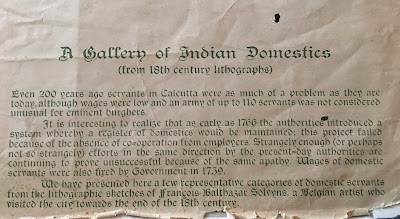
"A Gallery of Indian Domestics"

 Having domestic help ( "Servants" ) is considered feudalistic these days and the practice lingers on only in pockets of third wor...